

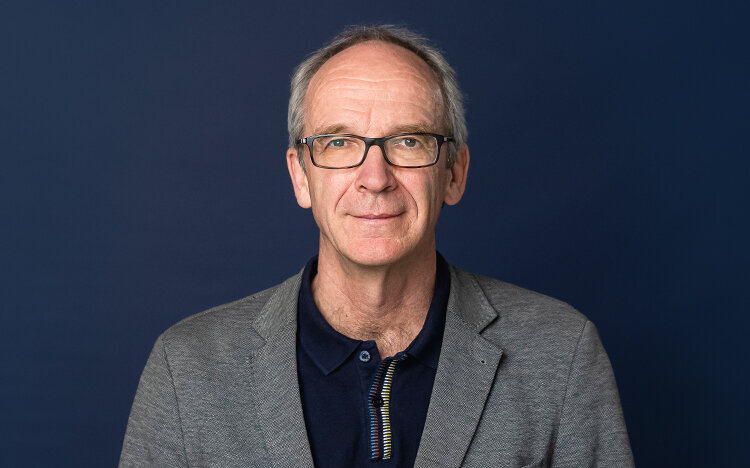
Prof. Dr. Malte Krüger
- Position Professor Faculty of Business and Law
-
Contact
-
Würzburger Straße 45
Room C01/42/108
63743 Aschaffenburg
-
malte.krueger@th-ab.de
- +49 6021 4206 787
-
Würzburger Straße 45
Current publications
Costs of Cash and Card Payments from a Consumer Perspective. Module 3: Costs of Cash and Card Payments from a Consumer Perspective, Deutsche Bundesbank 2025. (with F. Knümann, F. Seitz)
Costs of Means of Payment for Consumers: Literature review and some sensitivity analyses, IMFS WP 218/2025. (with Franz Seitz)
The digital euro from a consumer, retailer and industry perspective. Experise for the National Assoc. of German Coop. Banks (2024). (with H. Godschalk, F. Seitz)
Biography
Malte Krueger has been a professor at TH Aschaffenburg since 2011. He has worked as a researcher at the Banco de España, the University of Western Ontario, the Institute of Prospective Technological Studies (Seville) and the University of Durham. This was followed by teaching positions at KIT Karlsruhe and TH Frankfurt. For several years he worked for PaySys Consultancy, a management consultancy in the field of card payments. Malte Krueger has published widely in national and international journals on payment transactions, monetary policy issues and international monetary economics and has participated in several research projects on the topic of payment transactions.
Main focus of research
Payment Systems
The topic of payment systems has many facets. The range of topics in my publications on payment transactions is correspondingly broad.
One topic is the role of cash in payment transactions and its macroeconomic impact. Issues such as money laundering, the shadow economy, inclusion, and data protection also play a role in connection with cash.
Over time, there have been many innovations in payment systems. The resulting spread of checking accounts was particularly significant. Later came the spread of card payments and the introduction of new online payment methods. Above all, the development of so-called "e-money" led to great hopes and fears around the turn of the millennium. Blockchain, stablecoins, and digital central bank money are currently important topics.
The last few decades have seen a significant intensification of payment system regulation. In addition to issues of security and consumer protection, the focus was primarily on interventions in the business model of payment systems (keyword: "interchange fees").
Balance of Payments/Exchange Rates/Foreign Exchange Market
My publications in this area were strongly driven by the events of the 1980s and 1990s.
In the 1980s, the focus was on the high current account deficits of the USA and the surpluses of countries like Germany and Japan. The ups and downs of the US dollar also received considerable attention. In the 1990s, the focus was initially on the rapid turnaround in the German current account balance, followed by the problems in the European Monetary System. In the economic debate, the role of financial markets was repeatedly emphasized, with the role of currency speculators often being critically targeted. I have addressed all of these aspects in my academic work.
Monetary Policy and Theory
A focus of my work in this area is on analyses related to three very closely intertwined discussions from the 1990s. At that time, there was the observation that banks' reserves at the central banks were shrinking. Therefore, the question arose as to what central banks could still do if the demand for cash were to fall to zero. At the same time, there were economists who, given falling transaction costs in the financial markets, expected that transactions would occur without the use of money. Finally, at the end of the 1990s, there was the fear (or hope) that e-money issued by private issuers could displace central bank money. As a result, it was concluded in each case that the influence of traditional monetary policy could be expected to diminish. In my work, I have critised these views.
Further work relates to individual aspects of monetary theory or policy (including economic history analyses).
Expertise
-
Payment systems
-
Two-sided markets
-
Monetary policy
-
Monetary theory
-
Economics of cash payments
-
Economics of card payments